
Brand Affinity vs Brand Loyalty: The Strategic Difference That Drives Ecommerce LTV (2026 Guide)
Confused about brand affinity vs brand loyalty? Discover the key difference and how it drives retention, margins, and LTV growth.
Summarize this post with AI
Most e-commerce brands talk about retention, but few clearly understand the difference between brand affinity and brand loyalty.
On the surface, they look similar because both relate to customer loyalty. In reality, they drive growth in very different ways. One creates emotional attachment. The other creates repeat behavior.
If you confuse the two, you may increase sales while quietly weakening your margins.
In this guide, we break down brand affinity vs. brand loyalty in simple terms and show how each affects lifetime value, pricing power, and long-term ecommerce growth.
Brand Loyalty vs Brand Affinity, Clear Definitions + Economic Impact
People often use “brand loyalty” and “brand affinity” as if they mean the same thing. They don’t.
One is about behavior. The other is about belief.
One keeps revenue stable. The other expands margins.
If you run an e-commerce brand, knowing the difference changes how you build retention, how you measure success, and how you protect profit when discounts stop working.
Here’s the simple breakdown:
| Brand Loyalty | Brand Affinity | |
|---|---|---|
| Primary Driver | Transactional incentives | Emotional identity |
| Retention Type | Behavioral | Psychological |
| Revenue Impact | Predictability | Margin expansion |
| Risk | Discount dependency | Monetization gap |
| Measured By | RPR, CLV, churn | NPS, referrals, engagement depth |
Now let’s unpack what that actually means.
What Is Brand Loyalty? (Behavioral Retention)
Brand loyalty is when customers prefer you, trust you, and feel connected to what you stand for.
In simple words, people keep buying from you. Not necessarily because they love you. But because it’s easy, familiar, or financially rewarding.
They might:
- Use your subscription because it saves time
- Stay because they have points to redeem
- Reorder because your checkout is fast
- Stick around because switching feels like work
That’s loyalty.
But here’s the important nuance:
Loyalty can exist without emotional connection.
A customer can reorder your protein powder every month and still switch the moment a competitor offers 20% off. They were loyal in behavior, not in their beliefs.
That’s why loyalty drives predictability, but not always pricing power.
What Is Brand Affinity? (Emotional Alignment)
Brand affinity is an emotional connection and identity alignment that makes customers prefer your brand beyond price or incentives.
This is deeper than repeat buying.
It’s when customers feel like your brand reflects who they are. It matches their values. Their taste. Their identity.
They don’t just buy from you. They relate to you.
And that changes everything.
When customers have affinity:
- They recommend you without being asked
- They defend your brand online
- They wait for restocks instead of buying alternatives
- They pay full price because they believe you’re worth it
Affinity reduces price sensitivity and increases advocacy.
And economically, that’s powerful.
It allows margin expansion. It lowers dependency on discounting. It turns customers into unpaid marketers.
But there’s a catch.
Affinity without a clear monetization engine can create what we call a “monetization gap.” You might have high engagement, a strong community, lots of likes, but weak repeat revenue.
So affinity needs structure. Loyalty needs depth. The strongest brands build both.
The Economic Impact: Why This Distinction Matters
If you only optimize for loyalty, you risk building a discount-driven retention machine. Revenue is steady, but margins shrink, and customers become promotion-trained.
If you only optimize for affinity, you might build a loved brand that struggles to convert emotional connection into consistent revenue.
The smart move is understanding what stage your brand is in.
- Early-stage brands often build affinity first through story and positioning.
- Scaling brands formalize loyalty through subscriptions, bundles, and reward systems.
- Mature brands integrate both so that behavior and belief reinforce each other.
Because in short:
Loyalty keeps customers buying. Affinity makes them care.
And when customers both buy and care, that’s when retention compounds.
If you’re building for long-term ecommerce growth, don’t just ask: “How do we increase repeat purchase rate?”
Also ask: “Would customers miss us if we disappeared?”
That second question is where real brand power lives.
Yes, that structure actually works better.
Instead of separating loyalty metrics and affinity metrics into two long lists, putting them into a direct comparison table makes the contrast clearer. Ecommerce readers can scan it faster, and it forces them to notice the difference rather than blend everything together.
Here’s the rewritten section with your new structure.
How to Measure Brand Loyalty vs Brand Affinity (Ecommerce Metrics Framework)
If you want to properly diagnose your brand, you need to measure loyalty and affinity side by side. Looking at them separately often hides the imbalance.
Below is a simple comparison framework you can use internally.
A Comparison Table: Core Brand Loyalty Metrics vs Core Brand Affinity Metrics
| Brand Loyalty Metrics (Behavioral) | Brand Affinity Metrics (Emotional) |
|---|---|
| Repeat purchase rate | Net Promoter Score (NPS) |
| Purchase frequency | Branded search growth |
| Time between purchases | Direct traffic % |
| Subscription retention rate | UGC volume |
| Loyalty tier distribution | Social saves & shares (not just likes) |
| LTV by cohort | Full-price purchase rate |
Here’s how to think about it.
Loyalty metrics tell you if customers are coming back. They measure consistency, predictability, and revenue stability. If these numbers improve, your cash flow usually becomes easier to manage.
Affinity metrics tell you why customers prefer you. They measure emotional connection, advocacy, and willingness to choose you without incentives. If these numbers improve, pricing power and organic growth usually follow.
The most significant signals to watch are:
- Full-price purchase rate → This often reveals real affinity. If customers regularly buy without discounts, brand strength is doing the work.
- Churn after promotions end → This exposes artificial loyalty quickly.
- Branded search growth + repeat purchase rate together → When both rise at the same time, you’re building both belief and behavior.
When loyalty grows without affinity, margin pressure tends to increase. When affinity grows without loyalty systems, lifetime value tends to stall.
The magic happens when both sets of metrics move in the same direction.
Diagnostic Dashboard: How to Spot Imbalance
Once you have your metrics mapped, patterns become easier to read.
- High repeat, low engagement → Habit dependency. Customers come back out of convenience, not connection. Revenue feels stable, but pricing power stays weak.
- High engagement, low repeat → Monetization gap. People like the brand, follow it, and interact with it. They just don’t buy often enough to drive strong LTV.
- High discounts required → Weak affinity. If sales spike only when promotions run, the price is doing the heavy lifting instead of the brand.
- High churn after incentives → False loyalty. Customers stay while rewards exist, then disappear when they stop. That’s rented retention, not real loyalty.
The goal is not to maximize one column and ignore the other. It’s to build a system where emotional alignment fuels repeat buying, and repeat buying strengthens emotional attachment.
When that alignment happens, retention compounds instead of resetting every quarter. And that’s when ecommerce growth starts to feel durable, not fragile.
3 Real-World Ecommerce Examples
Looking at real brands makes the difference between loyalty and affinity easier to understand.
Each of the companies below leans on a different growth engine, and there’s a clear lesson in how they structure retention.
Amazon: Loyalty-Dominant Model (System-Led Retention)
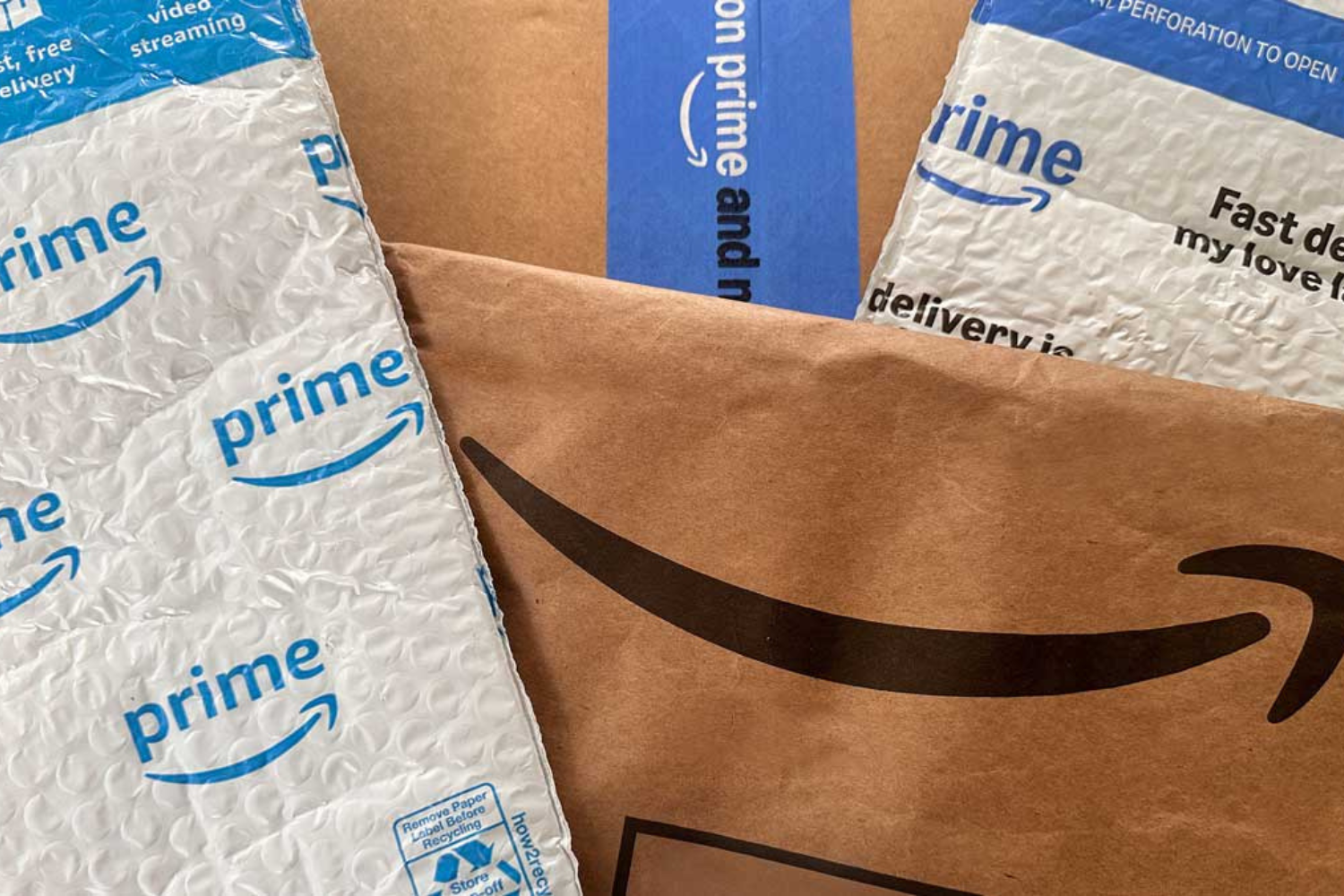
Amazon is a loyalty-first machine.
Its retention engine is built on convenience, speed, and operational excellence. Prime reduces friction, shortens delivery time, and bundles value into one membership. Customers stay because it is easier to stay than to leave.
This is behavioral loyalty at scale. The relationship is practical, not emotional.
Amazon proves you can dominate through systems even if emotional affinity is limited.
Patagonia: Affinity-Dominant Model (Values-Led Loyalty)

Patagonia represents the opposite side of the spectrum.
Its strength comes from value alignment and long-term trust. Environmental activism, product durability, and mission clarity create an identity connection. Customers feel aligned with the brand's values. A strong affinity reduces reliance on discounts and protects margins.
Loyalty exists, but it flows from belief rather than incentives.
Patagonia shows that a strong affinity reduces reliance on discounts and protects margins.
Apple: Hybrid Model (Affinity + Engineered Loyalty)

Apple combines both forces.
It builds deep emotional identity around design and creativity. At the same time, its ecosystem increases switching costs across devices and services. Preference and lock-in reinforce each other.
This is the endgame model.
Apple demonstrates that when affinity and loyalty systems work together, brands gain both retention stability and premium pricing power.
How to Align Loyalty Systems with Brand Affinity (Without Mixing the Two)
Most e-commerce brands don’t fail because they ignore loyalty or affinity. They fail because they blur them together.
They launch a loyalty program, hoping it builds an emotional connection.
Or they invest in brand storytelling, expecting it to automatically increase the repeat-purchase rate.
These are different levers. They need to work together, but they should not be confused.
The smarter approach is to design them in layers.
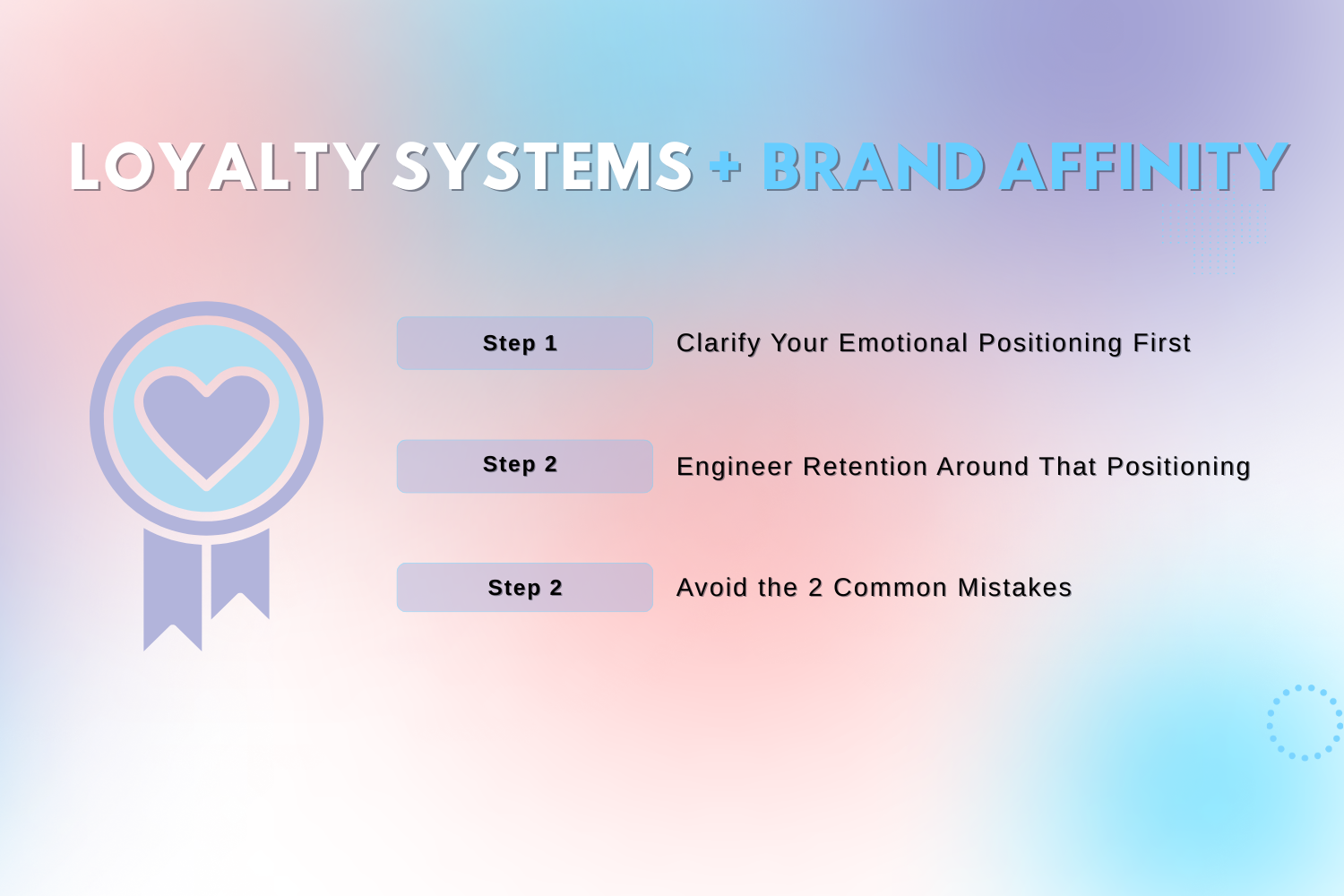
Step 1: Clarify Your Emotional Positioning First
Before you build retention mechanics, define what your brand stands for.
- What belief do you represent?
- What type of customer identity are you reinforcing?
- Why would someone choose you beyond price?
If this foundation is unclear, loyalty systems will default to discounts. Customers will respond to incentives, not attachment.
Affinity gives meaning to the transaction. Without it, retention becomes transactional.
Step 2: Engineer Retention Around That Positioning
Once your emotional positioning is clear, build systems that reinforce it.
Instead of generic rewards, design loyalty mechanics that feel aligned:
- Exclusive drops for insiders
- Tiered status that reflects community belonging
- Subscriptions that deepen usage, not just reduce price
- Personalized communication that reinforces identity
Now loyalty doesn’t replace affinity. It amplifies it.
Step 3: Avoid the Two Common Mistakes
Mistake 1: Using discounts to compensate for a weak brand meaning. This increases repeat purchases in the short term but weakens pricing power long term.
Mistake 2: Building community without a retention structure. This creates engagement but not lifetime value.
Strong brands don’t choose one. They design both intentionally.
The Strategic Takeaway:
Loyalty is the system. Affinity is the reason.
Build the reason first. Then build the system around it.
When customers believe in the brand, and the structure makes staying easy, retention compounds naturally rather than being forced every quarter.
Conclusion
Loyalty alone creates fragile retention. Customers come back, but often because of convenience or incentives. The moment discounts stop, churn can rise.
Affinity alone creates unstable revenue. People may love your brand, follow your content, and talk about you, but that emotional connection does not always turn into consistent purchases.
The real goal is emotional attachment plus behavioral consistency. You want customers who care about your brand and return regularly without being pushed.
Brands that master both dominate lifetime value and pricing power. They do not rely heavily on promotions, and they do not panic when ad costs increase. Their retention compounds because belief and habit reinforce each other.
If you take one idea from this guide, let it be this: build meaning first, then build systems that make staying easy.
FAQs
What is the difference between brand affinity and brand loyalty in e-commerce?
Brand loyalty is repeat buying behavior. Brand affinity is an emotional connection and alignment with identity blocks. Loyalty shows up in purchase data, while affinity shows up in advocacy, preference, and willingness to pay full price.
How do I measure brand loyalty for my Shopify store?
Focus on repeat purchase rate, purchase frequency, time between purchases, subscription retention, and lifetime value by cohort. These metrics indicate whether customers are returning consistently.
What are the building blocks of strong brand affinity in ecommerce?
Look for high NPS, growing branded search, strong direct traffic, user-generated content, and a healthy full-price purchase rate. When customers recommend you and do not wait for discounts, affinity is likely strong.
Can I have brand loyalty without affinity?
Yes. Customers can return for convenience or for incentives to support the brand's values. However, this type of loyalty is more fragile and often depends on discounts or friction.
How does brand affinity improve e-commerce profitability?
Affinity reduces price sensitivity and increases referrals. Customers buy at full price more often, which protects margin and lowers reliance on paid acquisition.
What’s the first step to building brand affinity for DTC brands?
Start with clarity. Define what your brand stands for, who it represents, and why it matters beyond the product. Then make sure your messaging, campaigns, and customer experience consistently reflect that meaning.
Brand loyalty vs affinity: Which should e-commerce prioritize?
They should not be treated as competing priorities. Affinity builds preference, and loyalty systems turn that preference into repeat revenue.
The strongest strategy is to develop both intentionally and let them reinforce each other over time.

Written by
Thomas Nguyen is the CTO of Joy, a loyalty solution for Shopify and eCommerce brands. With years of experience building high-performance Shopify apps, Thomas aims to help merchants grow through customizable and retention-focused tools.
Related reading
 How-to Guide
Customer Loyalty and Customer Satisfaction: Why Happy Customers Still Leave (And How to Fix It)
Customer satisfaction is a score; loyalty is a behavior. Confusing the two leaves you with a store full of happy one-time buyers. Here's the difference, why satisfaction alone fails, and a framework to close the gap.
 Thomas Nguyen
 How-to Guide
How to Measure Brand Loyalty: 6 Critical Metrics for 2026
Likes don't equal loyalty - and neither do single-purchase sales. This guide breaks down how to measure brand loyalty with 6 critical metrics: LTV, repeat purchase rate, retention rate, point redemption, NPS, and UGC. Plus benchmarks for 2026 - when acquisition costs are 4× higher.
Thomas Nguyen How-to Guide
How to Build a Customer Loyalty Survey That Prevents Churn
Most brands feel churn coming but never ask why. A well-designed customer loyalty survey flags at-risk customers 30–60 days before they leave — covering NPS, CSAT, and CES, question design, and how to turn feedback into retention action.
Thomas Nguyen How-to Guide
Building Brand Loyalty for Ecommerce Brands in 2026: A Complete Playbook
Building brand loyalty is how smart ecommerce brands grow without chasing ads. Learn simple ways to turn buyers into repeat fans.
Thomas Nguyen How-to Guide
Loyalty Program Management: What It Actually Takes to Run a Program That Grows
If your loyalty program launched strong and then quietly stopped moving, this is the guide that fixes it
Thomas Nguyen How-to Guide
Brand Loyalty Statistics: The 2026 Profitability Guide
Facebook CAC jumped 295% in a year. Allbirds got 1700% ROI from loyalty. This 2026 brand loyalty statistics guide unpacks the benchmarks that separate profitable retention from expensive acquisition — plus the redemption rates, LTV math, and Gen Z data behind today's top programs.
Thomas Nguyen