
Apple Brand Loyalty: A Strategic Breakdown for Ecommerce Growth (2026)
Apple brand loyalty isn’t luck. See the data, strategy, and ecommerce lessons you can use to build customers who don’t switch.
Summarize this post with AI
Most ecommerce brands lean on discounts to drive repeat sales. Flash sales. Coupon codes. “Limited-time” offers that somehow never end.
Apple plays a very different game. It rarely discounts. It almost never competes on price. And yet millions of customers upgrade again and again, often before they need to.
That’s not luck. And it’s not just good branding.
Apple brand loyalty is engineered.
It’s built through product design, ecosystem lock-in, services revenue, and emotional positioning.
In this guide, we’ll break down the architecture behind Apple’s loyalty machine. Then translate it into a practical framework that ecommerce brands can actually apply.
Apple Brand Loyalty Defined (Why It’s a Benchmark)
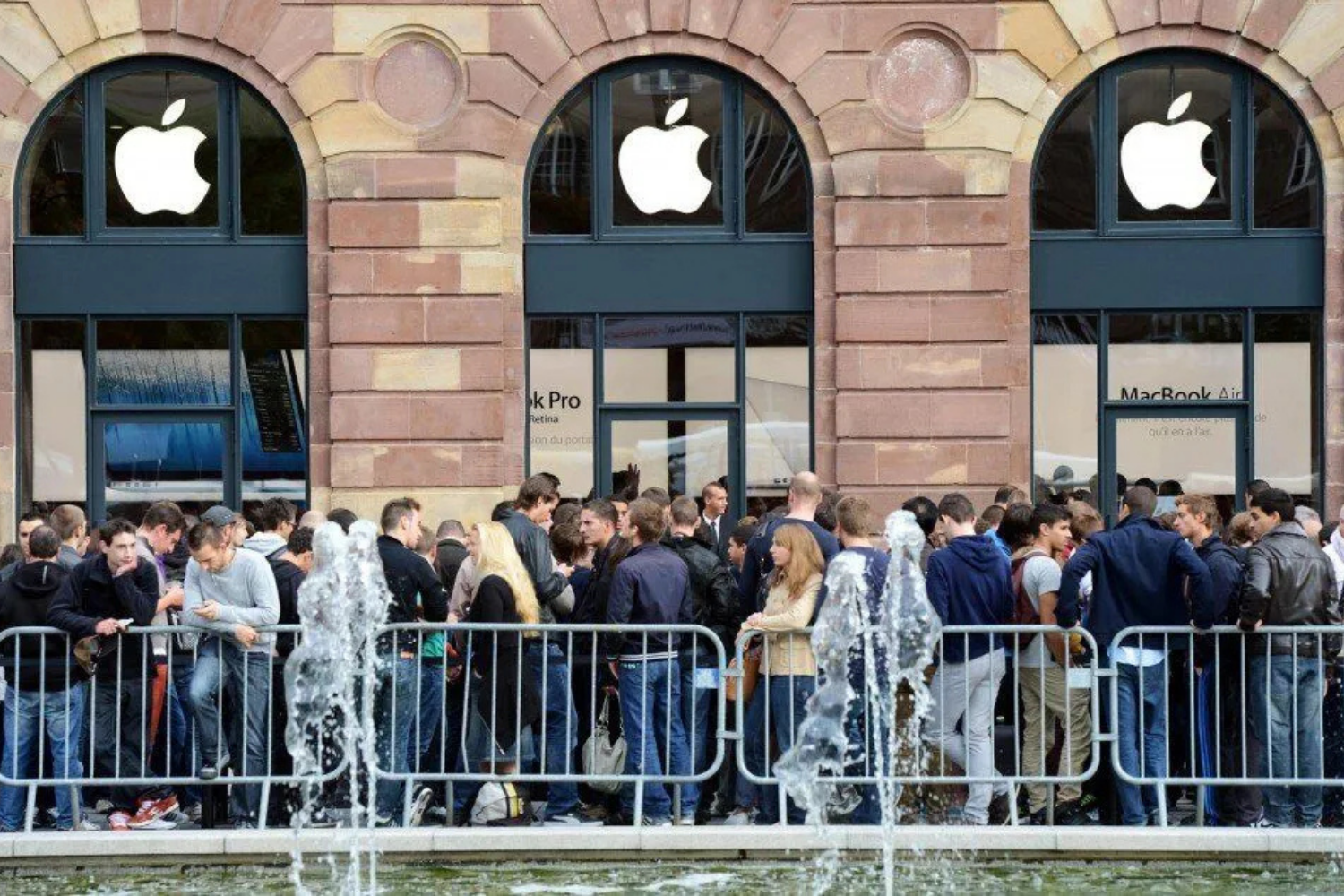
Apple’s loyalty is often described as “strong,” but that word doesn’t fully capture what’s happening.
This isn’t just about customers liking a brand. It’s about how that loyalty shows up in behavior, in data, and ultimately in financial performance.
To understand why Apple Inc. sets the benchmark, we need to look at 3 layers: what its loyalty really means in practical terms, the hard numbers that prove it’s an outlier, and the financial impact that loyalty creates.
Let’s break those down step by step.
What Apple Brand Loyalty Really Means
Apple’s loyalty shows up in 3 simple ways:
- High retention: Most iPhone users buy another iPhone when they upgrade.
- Strong repurchase intent: Customers don’t shop around much.
- Emotional advocacy: Apple consistently scores high in satisfaction and recommendation metrics.
For e-commerce brands, Apple is a benchmark because it proves loyalty can reduce discount dependence, increase lifetime value, and create predictable growth.
Next, we’ll look at the numbers behind that loyalty, how the ecosystem reinforces it, and what ecommerce brands can copy.
The Numbers That Make Apple an Outlier
1. iPhone Retention Rates. According to market data, Apple’s iPhone retention rate has held above 90%, with many estimates around 92% in recent years.
That means nine out of ten customers stay. Switching rates are lower than competitors'.
2. Ecosystem Adoption. Active devices surpassed 2 billion globally in 2023, according to Apple’s earnings reports. Many users own multiple Apple products (iPhone, Apple Watch, AirPods, Mac), which increases switching costs.
3. Services Revenue Growth. Apple’s Services segment (including Apple Music, iCloud, Apple TV+, and the App Store) generated over $85 billion in fiscal 2023, making it a major profit engine.
4. Recurring Revenue Expansion. Paid subscriptions across Apple’s platform exceeded 1 billion in 2023. That recurring layer stabilizes revenue beyond hardware cycles.
These numbers show something important: loyalty is not just emotional. It’s structural.
The Financial Impact of Loyalty
- Recurring Revenue from Services
Because customers stay in the ecosystem, they are far more likely to adopt services within it.
- iCloud storage upgrades
- Apple Music
- AppleCare
- App subscriptions
Hardware-level retention protects recurring revenue at the service level. When churn is low, subscription revenue becomes predictable. Predictable revenue increases valuation multiples and financial stability.
- ARPU Expansion. Average Revenue Per User (ARPU) expands when customers:
- Own multiple devices
- Subscribe to services
- Upgrade to premium tiers
Apple’s ability to move customers from iPhone-only to multi-device households significantly increases customer lifetime value. The first purchase is not the goal. The ecosystem expansion is.
For ecommerce brands, this is the shift from “first order revenue” to “customer revenue portfolio.”
- Premium Pricing Power. Perhaps the most impressive outcome of Apple’s loyalty is pricing resilience.
Apple rarely competes on discounts. Its flagship iPhones consistently sit at premium price points compared to competitors. Yet demand remains strong.
That’s what loyalty does. It protects the margin.
For e-commerce brands, the lesson is clear: loyalty is not just about retention. It’s about building systems that increase lifetime value, reduce price sensitivity, and create predictable revenue streams.
Why Apple Customers Stay: The Truth About Brand Loyalty
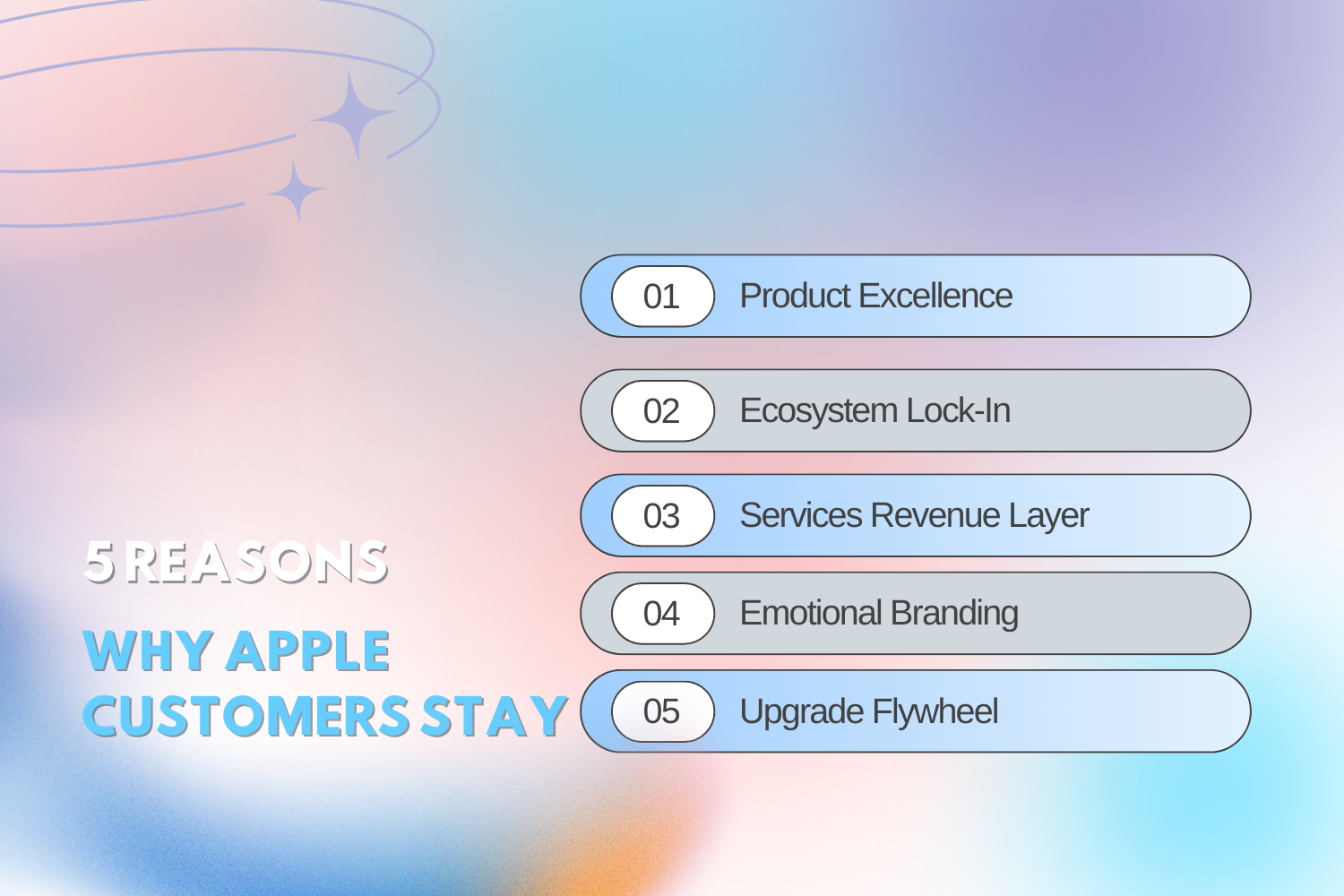
Apple’s loyalty isn’t driven by a single tactic. It’s a layered system where each part strengthens the next.
Think of it as five stacked drivers: product, ecosystem, services, identity, and upgrade cycle.
Together, they turn customers into long-term revenue.
1. Product Excellence as Retention Foundation
Everything starts with the product.
Apple Inc. built loyalty by making products that feel simple, reliable, and tightly integrated. Hardware and software work together smoothly, updates are consistent, and the user experience feels intuitive. That reduces frustration and buyer’s remorse.
For ecommerce brands, this is the hard truth: loyalty programs cannot fix weak product-market fit. If the product disappoints, points and perks won’t save retention. Strong reviews, low returns, and a smooth post-purchase experience are the real foundation.
2. Ecosystem Lock-In & Switching Costs
Apple doesn’t just sell devices. It builds an environment that the customers get used to.
Switching costs stack up:
- Technical: iMessage, AirDrop, iCloud syncing across devices
- Financial: paid apps, subscriptions, accessories
- Social: group chats and FaceTime habits
- Psychological: status and brand identity
Leaving means friction, lost convenience, and sometimes lost identity.
Ecommerce brands can build softer versions of this by creating membership ecosystems, stacking subscriptions, integrating products across categories, and using wallet credits or stored value. The goal is simple: make staying easier than leaving.
3. The Services Revenue Layer (Loyalty Beyond the First Purchase)
After the hardware sale, Apple deepens the relationship through services like Apple Music, iCloud, Apple TV+, Apple Pay, and AppleCare.
These services increase average revenue per user, create daily habits, and make upgrades feel seamless. Revenue becomes recurring instead of purely transactional.
For ecommerce brands, this translates to adding subscriptions, extended warranties, premium tiers, digital products, or value-added services. The aim is to move from one-time orders to ongoing accounts.
4. Emotional Branding & Identity Signaling
Apple products signal taste and belonging. Product launches feel like cultural moments, and customers often describe themselves as “Apple users,” not just device owners.
That emotional layer protects the margin because loyalty shifts from functional to identity-based. Customers are no longer just buying a product; they are reinforcing who they are.
Ecommerce brands can move in this direction by building a clear worldview, creating community moments, and turning launches into events rather than simple promotions.
5. The Upgrade Flywheel
Apple reinforces loyalty through predictable upgrade cycles. Annual launches build anticipation, trade-in programs lower friction, and ecosystem continuity makes upgrading feel natural.
This creates repeat hardware revenue on a rhythm, not by chance.
DTC brands can design similar flywheels with seasonal refreshes, upgrade credits, limited drops, and clear product evolution. Instead of hoping customers return, you give them a reason and a timeline.
The Hidden Costs of Apple Loyalty (And What Brands Should Learn)
When we talk about loyalty, it sounds positive. Higher retention. Better margins. More repeat purchases.
But loyalty also creates hidden costs, not for the brand, but for the customer.
Over time, customers invest money, data, habits, and identity into a brand. The deeper that investment goes, the harder it becomes to switch. Apple Inc. understands this better than almost anyone.
If you want to build real loyalty in e-commerce, you need to understand what customers are giving up when they choose to stay.
Premium Pricing and the Willingness to Pay More
Apple products are rarely the cheapest option in their category. Yet millions of customers upgrade year after year without waiting for heavy discounts.
Why are they willing to pay more?
Because they trust what they’re buying.
Over time, Apple has built a track record of product quality, consistent updates, strong resale value, and seamless integration across devices. That track record reduces perceived risk. Customers feel confident the product will work, last, and fit into their daily lives.
When trust is high, price sensitivity drops.
For e-commerce brands, you cannot simply raise prices and call it “brand positioning”. Loyal customers accept higher prices when:
- The experience improves over time
- The product consistently delivers
- Support is responsive and reliable
- The brand feels stable and trustworthy
If customers feel like you are charging more without adding value, resentment builds fast. Loyalty collapses when people feel exploited.
The privilege to charge more comes after you have proven you are worth it.
Switching Costs, Data, and Habit Formation
Loyalty often grows quietly through small actions. When you use an iPhone, you buy specific apps, store thousands of photos in iCloud, and connect your Apple Watch. Eventually, your "muscle memory" adapts to how the phone works.
If you try to switch to a different brand, it no longer feels like a simple purchase; it feels like a difficult "migration." You would have to move your data and relearn how to use a phone. In e-commerce, you can create this same feeling, without "trapping" the customer, by using:
- Saved Profiles: Make it easy for them to store preferences.
- Personalized Recommendations: Show them you know what they like.
- Accumulated Rewards: Give them a reason to feel that leaving means losing progress.
Every interaction that personalizes the experience adds light friction against leaving.
If your product becomes part of someone’s weekly routine, churn drops naturally because habit replaces decision-making.
Value Density: Giving More Than You Take
Here’s where many brands misread Apple’s strategy.
They see high prices and assume the secret is premium positioning.
But Apple does not win because it charges more. It wins because it delivers high value density.
Value density is the amount of perceived value packed into each interaction, from packaging and product design to customer support, ecosystem benefits, and emotional experience.
If you want to justify a loyalty premium without creating resentment:
- Improve experience before increasing price.
- Add visible benefits for repeat customers.
- Communicate clearly what makes your product different.
- Reward tenure instead of punishing it.
If a customer feels they are getting more value than they are paying for, they will stay. Loyalty should be an exchange of value, not just a way to extract money.
How to Apply the Apple Model to Your Business
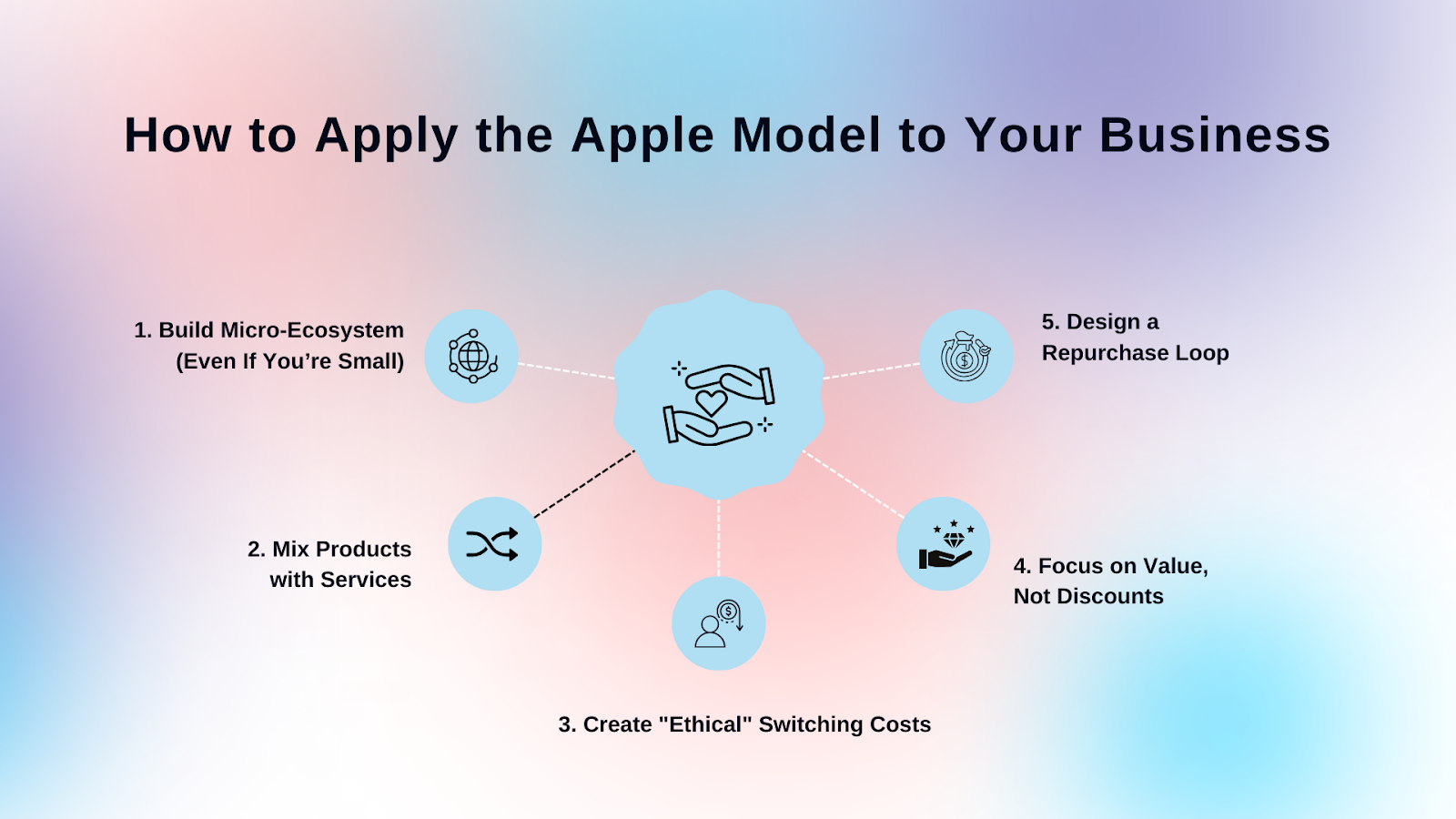
You don’t need a billion-dollar budget to use these strategies. You can build a "loyalty architecture" by following these five steps:
Build a Micro-Ecosystem (Even If You’re Small)
Even if you only sell a few products, make sure they work better together.
If you sell coffee, sell the filters and the mugs that fit the machine perfectly.
When products are designed as a system, customers are more likely to buy the "whole set" from you than to search elsewhere.
Mix Products with Services
One-time sales are unpredictable, but services create a lasting connection.
Consider adding a subscription for items that run out (like skincare) or offering a "members-only" group where customers can get expert advice.
This shifts the relationship from a simple transaction to an ongoing partnership.
Create "Ethical" Switching Costs
Instead of making it hard to leave, make it beneficial to stay. You can do this by using:
- Tiered Rewards: The longer they stay, the better the perks become.
- Saved History: Make it easy for them to re-order based on their past preferences.
- Status: Give long-term buyers early access to new releases.
Focus on Value, Not Discounts
Most stores try to buy loyalty with coupons, but that only teaches customers to wait for a sale. Instead, focus on the Value Loop:
- Attract them with a great promise.
- Onboard them with a smooth first delivery.
- Habitualize them by making your product part of their routine.
- Advocate: Turn them into fans who tell their friends about you.
Design a Repurchase Loop
Don’t wait for customers to remember you; give them a reason to come back.
Whether it’s a seasonal refresh, an "upgrade" discount for old models, or a simple reminder when it's time to refill, creating a predictable cycle ensures your revenue stays steady.
The Bottom Line: Apple’s success isn't magic; it is a carefully designed system. When you stop focusing on one-off sales and start building a structured environment of value, your brand will grow naturally without relying on expensive ads.
Conclusion
Apple Inc. did not “get lucky” with loyalty. They built it on purpose.
- The retention is engineered through systems thinking.
- The product is strong enough to earn trust.
- The ecosystem makes everything work better together.
- Services create recurring value.
- The brand builds identity. Upgrade cycles turn satisfaction into repeat purchases.
None of these pieces works alone. Together, they form a structure.
That is the real lesson: systems thinking.
E-commerce brands do not need Apple’s size or budget. They need structure.
If you focus on product excellence, connect your offerings into a small ecosystem, add service layers, and design intentional repurchase loops, loyalty becomes engineered rather than hoped for.
FAQs
Why is Apple’s brand loyalty so high?
Because customers trust the product, enjoy seamless device integration, and feel emotionally connected to the brand. High satisfaction plus ecosystem lock-in drives strong retention.
What role does the ecosystem play?
The ecosystem is one of the biggest drivers of loyalty.
Devices, software, and services work smoothly together. Photos sync automatically. Messages and files move easily between devices. Payments are integrated. The more products a customer uses, the more valuable the system becomes.
That interconnected experience makes staying simple and leaving complicated.
Does Apple use a loyalty program?
Apple does not rely on a traditional points-based loyalty program.
Loyalty is built through product design, ecosystem integration, and services rather than coupons.
How does Apple maintain premium pricing?
Apple maintains premium pricing by consistently delivering high perceived value. The products feel reliable, polished, and integrated into daily life. When customers trust that experience, they are less price-sensitive.
Premium pricing works because customers believe they are paying for quality, convenience, and continuity.
Can ecommerce brands replicate Apple’s strategy?
They cannot copy Apple’s scale, but they can apply the structure. Focus on strong products, interconnected offerings, recurring services, and intentional repurchase cycles to build lasting loyalty.

Written by
Thomas Nguyen is the CTO of Joy, a loyalty solution for Shopify and eCommerce brands. With years of experience building high-performance Shopify apps, Thomas aims to help merchants grow through customizable and retention-focused tools.
Related reading
 Examples & Inspiration
Brand Loyalty and Consumer Behavior: Strategic Case Study & Ecommerce Breakdown (2026)
Brand loyalty and consumer behavior are engineered, not accidental. See how Nike, Sephora, and others reshape buying habits - and how ecommerce brands can copy it.
 Thomas Nguyen
 Examples & Inspiration
Hilton Honors 2026 Review: The Easiest Path to VIP Status?
The Hilton loyalty scheme just made elite status far easier to reach. See how Hilton Honors tiers, points sweet spots, and perks stack up for 2026 travelers.
Thomas Nguyen Examples & Inspiration
Lufthansa loyalty scheme: Case study and strategic breakdown for e-commerce (2026)
What can an airline teach your store about retention? See how the Lufthansa loyalty scheme builds status, monetizes miles, and turns loyalty into infrastructure.
Thomas Nguyen Examples & Inspiration
IKEA Loyalty Program: How 170M Members Drive 50% of Revenue
IKEA Family has 170M members driving 50% of revenue — with zero tiers and a flat structure. After 73 years, the 2025 points refresh adds a new layer. This breakdown covers how it works, the emotional-loyalty playbook, hub-and-spoke architecture, and what Shopify brands can steal.
Thomas Nguyen Examples & Inspiration
World of Hyatt Guide 2026: Tiers, Rewards & Sweet Spots
The Hyatt loyalty program (World of Hyatt) offers the best value per point in travel. See how to earn free nights, unlock elite tiers, and find the top sweet spots.
Thomas Nguyen Examples & Inspiration
12 Brand Loyalty Examples: 2026 Strategies for Unshakeable Growth
From Apple's ecosystem to Gymshark's tribe, 12 brand loyalty examples that built unshakeable retention in 2026. Each one breaks down the structural mechanics behind the brand — and which strategies translate to Shopify ecommerce.
Thomas Nguyen