-0b515f.png?width=3840&q=75&f=webp&auto=format)
Black Friday and Cyber Monday 2025 will be some of the most competitive shopping days we've ever seen. While brands enjoyed a 9% drop in CAC in 2024, thanks to more efficient ad spend, the landscape has shifted. Rising ad costs, crowded placements, and aggressive competition mean CAC is climbing again, and any brand relying heavily on paid acquisition will feel that pressure fast.
To win this season, you need a plan that attracts customers without eroding your margins. That means preparing your store early, building demand before the rush, and creating a retention engine that turns first-time buyers into repeat customers long after BFCM ends.
This guide walks you through the exact steps to do that. Drawing from hands-on experience running loyalty programs and supporting fast-growing brands, you’ll learn the practical actions that keep acquisition costs under control while driving sustainable revenue.
After running a variety of loyalty programs, these are the essential steps to control your CAC. Before we jump into the guide, below are the key market shifts shaping this year’s season.
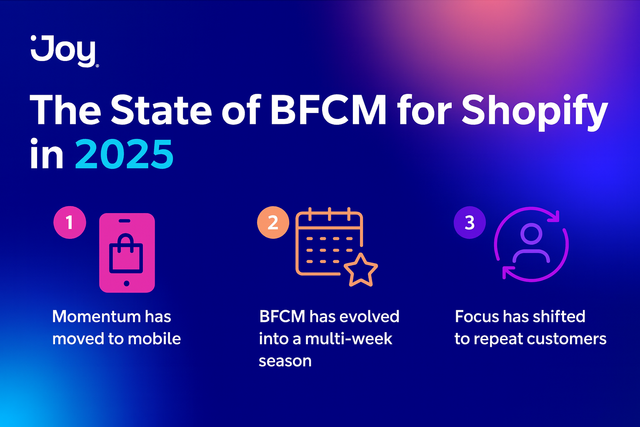
The state of BFCM for Shopify in 2025
How BFCM has evolved for Shopify merchants.
BFCM looks very different today than it did a few years ago.
First, the momentum has moved to mobile. Shopify data shows that more than 70% of BFCM purchases now occur on mobile devices, making mobile UX and load speed non-negotiable.
Secondly, the real value of BFCM now comes from what happens after the sale. The focus has shifted from one-time buyers to repeat customers.
Third, BFCM has expanded far beyond a two-day surge. It has evolved into a multi-week season that spans from early November to Christmas Eve.
What this means for Shopify brands
These shifts in market momentum are reshaping how every Shopify merchant, large or small, prepares for BFCM 2025.
To begin with, a smooth shopping experience has become a decisive factor in keeping customers browsing. The data is precise: nearly 53 percent of users leave your store if it takes more than 3s to load, which means your store must stay fast and stable even when deal hunters flood in.
On top of that, mobile shoppers are even more demanding. UserGuiding reports that 74 percent of visitors are more likely to return to a site with a good mobile UX. This pushes merchants to invest heavily in better UX so they can capture customers during peak rush hours and keep them engaged long after the sales season ends.
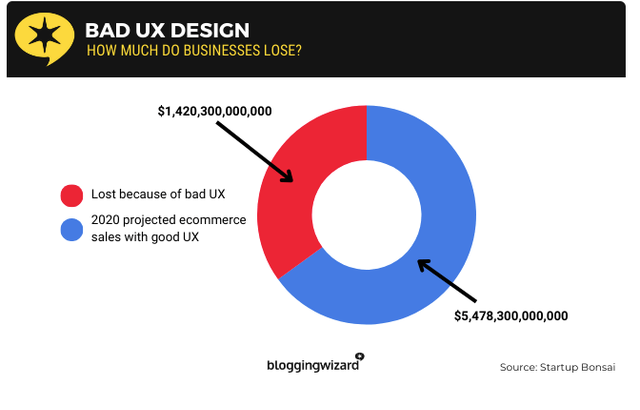
Moving on, attractive bundles and meaningful campaigns shape your customer’s first impression. BFCM seasons are now filled with heavy deals, endless perks, and competing offers, so it is no surprise that shoppers feel overwhelmed: approximately 78 percent of consumers say they feel overloaded by product choices when shopping online.
Finally, winning loyal customers is far more valuable than chasing one-time buyers. Repeat customers drive higher profitability, and brands rely on them to maintain steady revenue beyond the BFCM rush.
The Shopify Guide 2025
1. Clarify your BFCM objectives.
Before you adjust your offers or overhaul operations, define one clear objective for your BFCM strategy. A single, well-chosen goal sharpens your decision-making, keeps your team aligned, and prevents you from sinking time into tasks that look productive but don’t move the needle.
To set a sharp aim, start by asking what outcome matters most for your store this season. Your direction might center on:
- Driving peak sales volume
- Increasing average order value
- Attracting customers with long-term value
- Protecting your profit margin based on your cost structure
- Reinforcing repeat purchases and loyalty
Each aim follows successful trends from Shopify Analytics. And, merchants with a narrow focus often do better. This is because they allocate resources more effectively and execute faster.
2. Define your brand’s constraints
Defining your brand’s constraints during BFCM means knowing where you can operate. This helps you keep your identity. It lets you stay profitable and build customer trust during busy sales periods. Key constraints to consider include:
Brand positioning
Brand positioning is the most delicate part of your constraints. You may not see the damage in a single weekend, but if you act like a discount brand, customers will hold on to that impression long after BFCM ends.
Imagine you run a sustainable fashion label. Your story centers on clean materials and responsible production, not bargain pricing. For BFCM, that translates into clear guardrails such as:
• Cap discounts on your core eco essentials at 20 percent
• Make sure at least 80 percent of BFCM banners and product cards highlight fabric source or certification
• Keep at least 90 percent of items in your BFCM collection made from certified organic or recycled materials
These numbers keep you firmly in the sustainable space instead of sliding into bargain territory.

Inventory capacity
Inventory capacity is the practical side of your constraints. When it is not set well, best sellers run out early or slow movers eat up your cash, both of which create friction at a time when shoppers are ready to buy.
For a sustainable fashion brand, clear limits might include:
• Plan BFCM units at about 120 percent of expected sales
• Do not let a single style take more than 8 percent of total BFCM units
• Allow up to 25 percent of BFCM orders to be pre-ordered or made-to-order to avoid overproduction
These boundaries help you protect cash flow and minimize waste while still giving shoppers something to buy.
Customer expectation
Customer expectations are the promises you refuse to break, even when order volume spikes. They usually revolve around shipping, service, and returns.
A sustainable fashion store might set expectations like:
• Ship at least 95 percent of orders within three working days
• Use plastic-free or low-impact packaging for all shipments
• Keep the return rate below 12 percent while maintaining an average rating of 4.6 stars or higher during BFCM
These rules make it clear to your team what must stay consistent, no matter how busy the sale becomes.
The profit margin
Profit margin constraints stop you from chasing short-term revenue at the cost of long-term health. They connect your discount strategy to real business performance.
For a sustainable fashion brand, these limits might include:
• Keep the blended BFCM gross margin above 45 percent
• Do not push sitewide markdowns beyond 25 percent
• Ensure at least 60 percent of revenue comes from full price or lightly discounted items with margins above 50 percent
3. Build BFCM readiness baseline inside Shopify
Build a BFCM readiness baseline in Shopify that covers setup, operations, marketing, and handling traffic surges during rush hours. A solid baseline not only makes your store stand out but also works sustainably. Below are things you focus on:
Analytics and tracking setup
Time plays a vital role. This key part helps you quickly spot changes in factors during the BFCM campaign. Control flood surges with planned adjustments. This enables you to keep your customers.
Here are things for you:
Step 1: Use Shopify Analytics dashboards to check real-time performance during BFCM.
Step 2: Set custom reports for key metrics: sales, AOV, conversion rates, and top products.
Step 3: Establish benchmarks and alerts for any anomalous drops or spikes.
Step 4: Create specific BFCM tags for each channel, such as ads, discounts, and products. Use a format like "BFCM24_" to help with easy filtering and analysis.
Theme performance and technical health
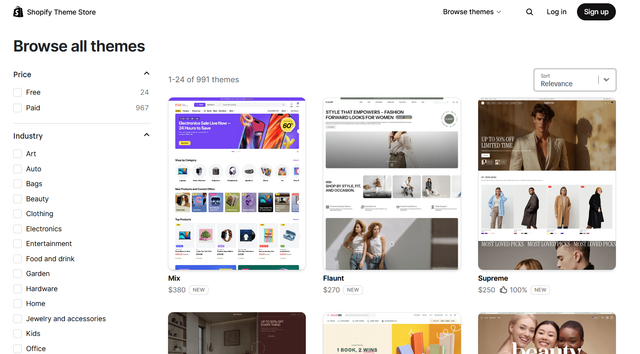
BFCM 2024 demonstrates the excellence of the Shopify theme in balancing speed, conversion-focused features, and mobile readiness.
They are key to helping merchants capture record sales and provide top-notch user experiences despite unprecedented traffic volumes. To ensure your store runs smoothly, here are the things for you:
Step 1: Check Loading Speed
- Use tools like Google PageSpeed Insights or Shopify’s performance tools to check your theme speed
- Remove or disable unused apps, heavy scripts, custom fonts, and large images to improve loading speed
Step 2: Audit App Scripts and Storefront Apps
- Review installed apps for active scripts impacting performance.
- Deactivate apps not essential for BFCM or move their scripts to load asynchronously if possible.
Checkout and payments optimization
During surge hours in BFCM, checkout and payment methods are key. They turn shopping carts into revenue. These key things are below to check:
- Ensure Shop Pay and key payment methods are active
- Shipping profiles and free shipping thresholds tuned for BFCM
- Buy now, pay later options for higher ticket AOV, such as Klarna, After Pay, Shop Pay, etc.
Data safety and backup
BFCM amplifies the risk of data errors and outages primarily due to the extreme surge in traffic, transactions, and operational complexity within a condensed timeframe.
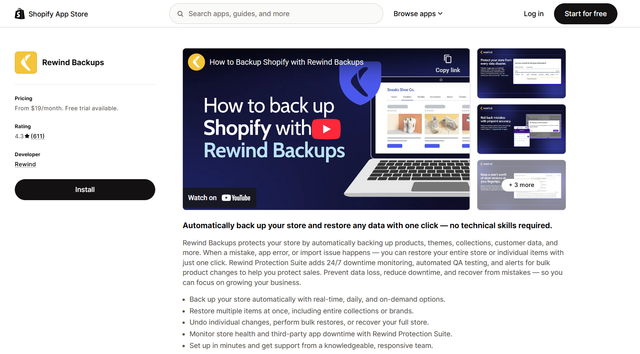
But for Shopify backups during BFCM, you have several options. These options protect your store’s data. This includes product listings, orders, customer info, and theme customization.
When a mistake, app error, or import issue happens, you can restore your entire store with just one click with Rewind Backup. It offers:
- Automatically backs up products, orders, customers, themes, pages, and settings
- Enables quick, selective restores in case of data loss or errors
- Supports version history and point-in-time recovery
4. Offer and pricing architecture for BFCM on Shopify
Your offer structure determines whether BFCM protects or destroys your margins. Throwing 50% off across your catalog generates volume but erodes profitability. Strategic pricing architecture maximizes revenue while maintaining healthy unit economics.
Map Your Product and Margin Profile
Start by understanding which products qualify for discounts and which don't. Pull margin data from your Shopify analytics. Calculate gross margin (revenue minus cost of goods) for each product or category.
Segment your catalog into three tiers:
- Hero products: Your bestsellers with healthy margins (40%+). They can give discounts of 20-30% and still make a profit. This is true even when you consider customer acquisition costs.
- Bundle candidates: Complementary products that sell well together. Bundling a high-margin item with a lower-margin product helps maintain profit. It also boosts perceived value.
- Long-tail inventory: Slower-moving items or products with thin margins (<25%). Apply clearance pricing to clear out old stock, or you can leave them out of blanket discounts altogether.
Offer Types That Work Well on Shopify
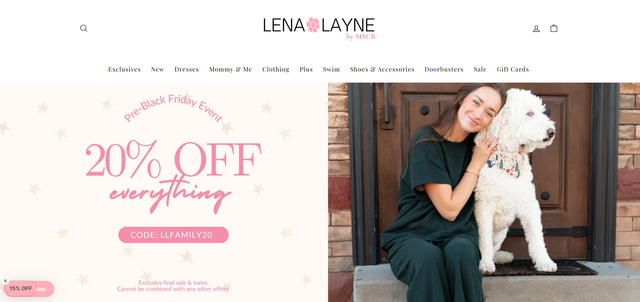
Percentage discounts (10%, 20%, and 30%) are easy to use. They’re easy for customers to grasp. The risk is that high-margin and low-margin products receive the same discount. This could lead to losing money on items that can’t handle it.
- Fixed-value discounts ($10 off, $25 off): Better margin protection for lower-priced items. A $25 discount on a $200 item (12.5% off) preserves more margin than a 25% discount ($50 off).
- Tiered cart promotions: Increase average order value while controlling discount depth. For example: "Spend $75, get 15% off; spend $150, get 25% off." This setup encourages bigger purchases. It also keeps larger discounts for high-value transactions that can handle them.
- Product bundles: Use apps like Fast Bundle to help you create fixed or custom bundles. This protects your margin by pairing high-margin items with lower-margin ones. A $120 bundle, valued at $150, gives customers a $30 savings. You have chosen products that keep a blended margin above 35%.
**Gifts with Buy:** Offer a free item when customers reach specific cart totals. Choose items that cost less to make but seem valuable.
"Spend $100, get a free travel-size product (your cost: $3, perceived value: $15)." This protects margins better than straight discounts while increasing conversions.
Free shipping thresholds with progress indicators:
- Set thresholds slightly above your average order value
- This encourages customers to spend more
- Show progress to keep them engaged
If your AOV is $65, set free shipping at $75. Apps like Hextom display progress bars: "Add $12 more for free shipping!" This visual nudge increases add-on purchases by 18-22% without margin-destroying discounts.
Offer governance & Discount Stacking.
Without clear rules, customers exploit many promotions simultaneously. This destroys margins. Shopify's discount code system doesn’t let you stack discounts by default. But confusion can arise when you combine automatic discounts with code-based promotions.
Establish stacking rules:
- Discount codes cannot combine with other codes (Shopify enforces this automatically)
- Automatic discounts (triggered by cart conditions) can combine with codes
- Use Shopify's discount priority settings. This controls which discount applies when multiple could trigger
Example of dangerous stacking:
- Automatic discount: 20% off orders over $100
- Email code: CYBER25 for 25% off
- Result if both apply: 45% total discount (or 40% if sequential)
Safer structure:
- VIP early access: 25% off with code VIPCYBER (excludes all other discounts)
- Public Cyber Monday: 20% off automatically (codes disabled during this period)
- Free shipping: Always available, stacks with percentage discounts
You document everything in a BFCM offer sheet that contains:
- All discount codes and their rules
- Automatic discount triggers and conditions
- Start/end times for each promotion
- Which products are included/excluded
- Maximum discount per order (if applicable)
- Customer service script for handling discount questions
This prevents conflicting offers and gives customer service clear answers. Afterwards, you can check the post-event analysis data.
5. Set up Storefront
Setting up a strong store is essential because it builds credibility and creates a professional first impression. Research from Sweor shows that nearly 75 percent of customers judge a brand the moment they land on its website. These early touchpoints shape how much they trust your store and how willing they are to spend.
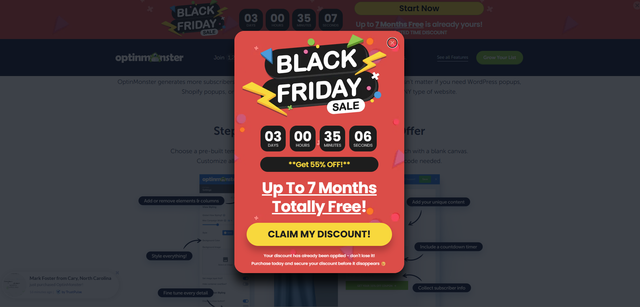
In today’s crowded market, shoppers are overwhelmed by bright wheels, loud animations, and playful pop-ups from every direction. That is why focusing on the core elements that build trust gives your brand a more apparent identity and a more sustainable path to growth.
Home page
Your BFCM hero area design section (the top area visitors see first) should show three things:
- What’s on sale
- How much they’ll save
- Where to start shopping
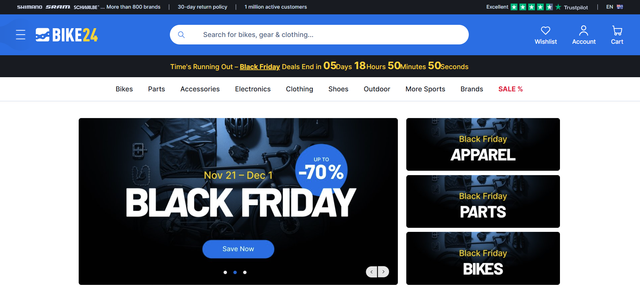
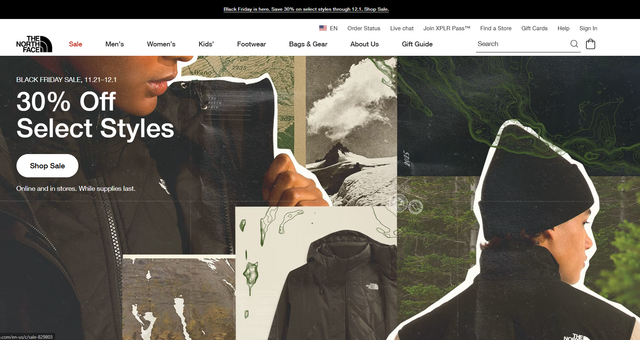
Vague messages like "Cyber Monday Sale" don't work. They blend in with the many other sales tabs people have open. Below is an effective hero messaging structure:
- Headline: Specific discount with clear scope ("30% Off Sitewide" or "Up to 50% Off Bestsellers")
- Subheadline: Urgency mechanism ("Today Only" or "Ends 11:59 PM Tonight")
- Visual CTA: Place a standout button labeled "Shop Now" or "Shop the Sale" in a visible spot.
- Trust signal: Free shipping on orders over $75 and free returns.
What doesn’t work:
- Generic hero images of products without sale messages.
- Many competing CTAs.
- Buried discount details that must be scrolled to find.
Baymard Institute's research shows that customers will not see full carousels. This happens because visitors often miss important information as the slides change.
Navigation Optimization
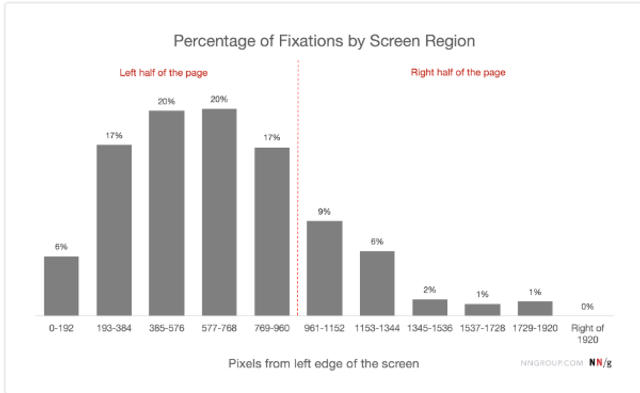
Create a dedicated "Cyber Monday Deals" navigation item at the top-left level. Don't hide your sale in a dropdown menu or a footer link. Nielsen Norman Group found that left-side menu items get more clicks than right-side items.
Strategic collection structure:
- "Best Sellers" (builds social proof)
- "Under $50" (appeals to budget-conscious browsers)
- "Bundles" (pre-selected for fast decisions)
- "Gift Guide" (solves shopper intent directly)
Search Tuning
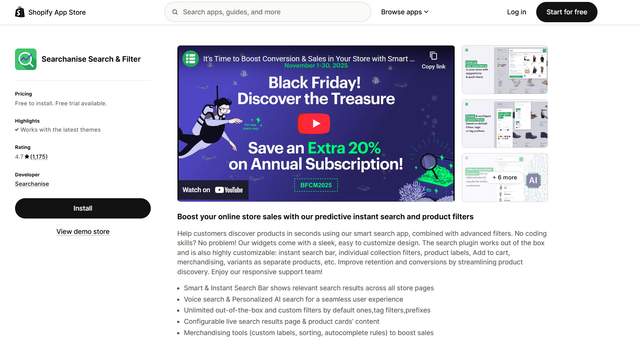
Search Tuning enables full auto-completion and synonym handling. When someone types "sneakers," your search should also return "athletic shoes" and "trainers."
Installing these apps, like Boost AI Search & Filter or Searchanise, provides this functionality.
Dedicated BFCM Landing Pages
Make landing pages for each category to boost paid traffic, such as:
- yourstore.com/cyber-monday-womens
- yourstore.com/cyber-monday-gifts
These focused pages convert 25-40% better than generic homepages. They do this by matching ad messaging to the target audience.
Each landing page should include:
- Reinforcement of the ad promise ("You clicked 'Women's Sale'—here it is")
- Filtered product grid showing only relevant items
- Repeated trust signals (free shipping, returns)
- No distracting navigation to other site areas
Mobile first considerations
Mobile screens display 60-70% less content above the fold than desktop monitors. What fits within a single desktop viewport requires 3-4 scrolls on an iPhone. This compression changes everything about the information hierarchy.
Can a mobile visitor grasp your offer and act on it without scrolling? No, they can not. Here are what appear to be the priorities of the mobile fold:
- Sale headline (greatest 6-8 words): "30% Off Sitewide" or "Cyber Monday: Up to 50% Off"
- Single CTA button (high contrast, 44px+ height): "Shop the Sale" or "Shop Now."
- One trust signal (7-10 words): "Free Shipping + Free Returns"
That's it. The three elements consume roughly 200-250 pixels in total.
6. Build Email Marketing Flow
Email isn't for a Monday broadcast channel. It's a six-week relationship-building system. Merchants train subscribers for six weeks. The goal was to help them expect and engage with more frequent communication. Here is a six-week warm-up calendar:
Weeks 6-4 before BFCM (Oct 21-Nov 3):
- Current frequency: 1 email per
- New frequency: 1 email/week.
- Content strategy: Educational, not promotional. Gift guides for upcoming holidays, product styling tips, and customer story features.
- Expected outcome: Open rates usually fall by 3-5% at first.
Weeks 3-2 before BFCM (Nov 4-17):
- New frequency: 2-3 emails/week
- Content strategy: Preview teasers without revealing exact discounts. Start building VIP segmentation. Identify customers who have spent over $200 in the last 12 months. Also, include loyalty program members with 500 or more points.
Week 1 Before BFCM (Nov 18-24):
- New frequency: Daily emails, Monday-Saturday
Content strategy:
- Final countdown: "4 days until our biggest sale."
- Announce VIP early access.
BFCM Week (Nov 25 - Dec 2):
Monday frequency: 3–4 emails
- 6 AM: Send an email to all non-VIP subscribers. (VIPs got early access on Sunday.)
- 2 PM: Reminder for openers who haven't bought yet. Check out "bestsellers selling out" and stock alerts!
- 8 PM: "Last chance - 4 hours left" to all non-purchasers, with a countdown timer.
Tuesday-Wednesday: Send extension emails only to non-purchasers. Don't email Monday buyers, or they might think the urgency is fake.
7. Launching Loyalty Program for BFCM buyers
During promotional periods, customers who receive discounts often have a lower lifetime value than those who do not. But if you turn these buyers into loyal fans of your brand, they can create far more long-term value.
A strong loyalty program helps you do this by driving repeat purchases, building solid relationships, and turning customers into free advocates. Here is how to create a loyalty program with specific steps to quickly set it up successfully.
Conclusion:
These steps give your store the foundation it needs to perform well during BFCM 2025. Winning this season is about making sure your onsite experience, loyalty program, and customer care work together. When your whole system is aligned, your store can handle pressure and convert more shoppers who visit.
BFCM is the start of something bigger. The new shoppers you earn this BFCM can become long-term customers. Use the insights in this guide to lift your profit margin and build momentum for the months ahead. With a steady plan and the right tools, you are preparing for success.



-a7e9a3.png?width=828&q=75&f=webp&auto=format)